
Transparency Act Statement 2025
1. Background
The purpose of the Norwegian Transparency Act is to promote enterprises’ respect for fundamental human rights and decent working conditions. Additionally, it ensures public access to information on how enterprises address issues related to human and labour rights.
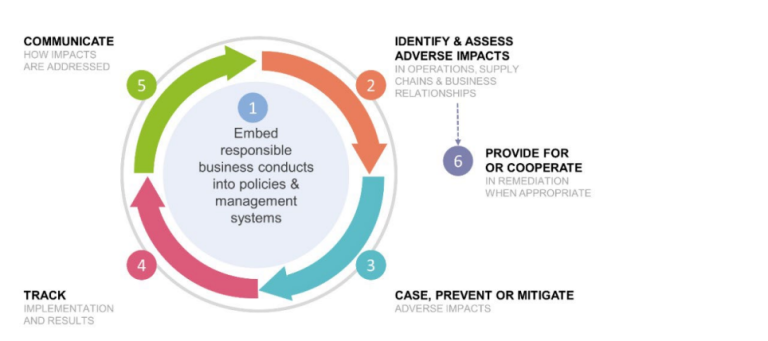
1.1. About Jotron
Jotron is a Norwegian limited company with more than 55 years of continuous operations in international markets. Jotron markets, develops, produces and services professional communication systems for security on land, sea and air. The headquarter is in Larvik, Norway.
Jotron’s product portfolio consists of two main groups:
- Maritime products related to Global Maritime Distress Safety System (GMDSS) and maritime navigation products
- Radio and recorder products for Air Traffic Control (ATC) and coastal communication
The maritime products are sold through authorised distributors in more than 60 countries across the world, in addition to our own subsidiaries. Jotron has trained personnel from more than 200 companies to provide worldwide service on Jotron products.
ATC and coastal products and systems are sold through larger tender processes, often towards public authorities.
Jotron consists of:
- Jotron AS
- Jotron SKIPPER AS
- UAB Jotron
- Jotron UK Ltd
- Jotron USA Inc
- Jotron Asia Pte Ltd
- Jotron MEP B.V
- AD Navigation AS
Jotron AS
Jotron AS was founded in 1967 and has direct responsibility for research and development (R&D), logistics management, production, sales and service on both product groups. Jotron AS is certified in accordance with ISO 9001:2015, ISO 14001:2023, ISO 27001:2023 and ISO 45001:2018.
Jotron SKIPPER AS
Jotron SKIPPER AS (former SKIPPER Electronics AS) was founded in 1984 and became a part of the Jotron group in 2023. Jotron SKIPPER AS develops and sells maritime navigation equipment and is certified in accordance with ISO 9001:2015, ISO 14001:2023, ISO 27001:2023 and ISO 45001:2018.
AD Navigation AS
AD Navigation was established in 2002 and became a part of the Jotron group in 2025. AD Navigation develops and sells maritime navigation equipment.
Jotron MEP B.V
Jotron MEP B.V was established in 1989 in Netherlands and became a part of the Jotron group in 2025. MEP develops and sells communication systems for maritime and aviation applications and is certified in accordance with ISO 14001:2015, ISO 9001:2015 and ISO 27001:2023.
UAB Jotron
UAB Jotron was founded in 2001 in Kaunas, Lithuania. The company is an integral part of the production in Jotron. UAB Jotron produces and tests professional electronics, cables and mechanical systems. UAB Jotron is certified in accordance with ISO 9001: 2015, and ISO 14001: 2015 and ISO 27001: 2017.
Sales offices
Jotron UK Ltd was founded in 1980. The company serves the British market through a network of professional agents from the facility in Newcastle, England. Jotron UK is certified in accordance with ISO 9001: 2015, ISO 14001: 2015 and ISO 27001: 2017.
Jotron USA Inc was founded in 2003 in Houston, Texas. The company serves and develops the markets in America and Canada. Jotron USA is certified in accordance with ISO 9001: 2015, ISO 14001: 2015 and ISO 27001: 2017.
Jotron Asia Pte Ltd was established in 2004, having previously operated as a representative office since August 2002. Based in Singapore, the company is responsible for the Asian markets. Jotron ASIA is certified in accordance with ISO 9001:2015, ISO 14001:2015 and ISO 27001:2017.
1.2 Management
Jotron AS is led by the managing director in compliance with the provisions of the Companies Act. In addition to the managing director, Jotron’s top management consists of directors for the three divisions: Operation, ATC&C and R&D, and directors for the support departments. Management meetings are held monthly, with mandatory attendance for all top management members. Each leader reports on their areas of responsibility to the managing director. The top management ensures that responsibilities, roles and inherent authorities are defined and communicated throughout the organisation.
2. Human and labour rights in own operations
2.1 Ethical guidelines for employees
Jotron’s capacity to create value relies on upholding high ethical standards as the foundation of trust-based and binding relationships with society, company owners, employees, business partners, customers and suppliers. Ethical business conduct goes beyond merely avoiding legal breaches; it encompasses how we interact with each other and with society. Every employee is accountable for adhering to rules and guidelines rooted in Jotron’s company values, which cultivate qualities of which we can be proud.
All Jotron employees are required to familiarise themselves with Jotron’s ethical guidelines. This document outlines our interactions with employees, customers, suppliers, competitors and publish authorities in accordance with the UN’s Universal Declaration of Human Rights. Mandatory e-learning courses on ethical guidelines are provided for all employees.
2.2 Working conditions, diversity and equality
Jotron is committed to upholding the principles outlined in the UN’s Universal Declaration on Human Rights, The UN’s Convention on Rights of the Child, and International Labour Organization Conventions (ILO conventions). No potential or actual adverse impacts on human and labour rights are identified in Jotron’s own operations.
Jotron shall not engage in or support any kind of use of child labour. If a young worker is employed, this is controlled and arranged according to legal requirements in terms of safety, work hours and guidance and is not allowed to interfere with applicable compulsory schooling.
Jotron respects all individuals and is actively making efforts to ensure a good working environment characterised by equality and diversity. Equality with respect to gender, ethnicity, nationality, religion, age and other diversity factors, as well as openness and tolerance, shall characterise our working environment. Behaviour must be based on the respect for others, and other cultures, religions and customs must also be respected. Fair employment practises following local norms and laws is the basic standard in all Jotron entities. No form of discrimination, harassment or bullying is tolerated.
The company has developed a salary system based on work experience and qualifications, irrespective of gender, age, or disabilities.
More information about Jotron’s work for equality and non-discrimination is described in our annual statement of equality and non-discrimination.
The measures described in this chapter also form part of Jotron’s compliance with the UK Modern Slavery Act to ensure that no modern slavery or forced labour occurs within its own operations.
2.3 Whistleblowing, non-conformities and corrective actions
Employees are encouraged to report any concerns regarding potential non-compliance with ethical guidelines or other misconduct by following the whistleblowing procedure outlined in Jotron’s employee handbook. Non-conformities and corrective actions are reported in Jotron’s management system.
3. Human and labour rights in the supply chain
Jotron sourced products and services to core business activities from 331 suppliers exceeding NOK 100 000 per supplier in 2025. These suppliers were spread across 36 countries. The majority of products and services, in term of purchase costs, were sourced from suppliers in Europe (88.2%). The Nordics make up 55.29% of the European purchases.
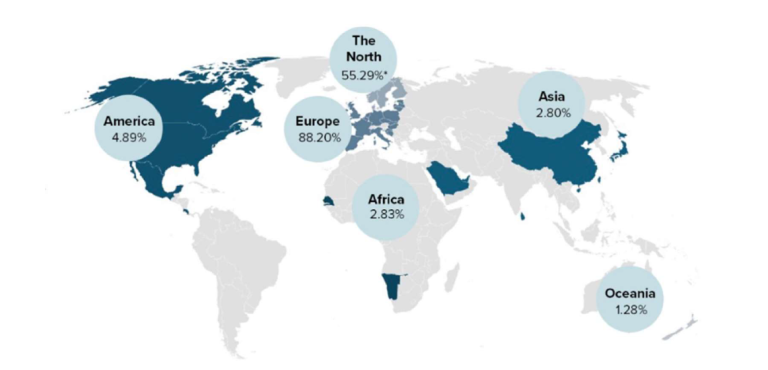
*The Nordic’ countries share of Europe.
3.1 Supplier Code of Conduct
Jotron’s Supplier Code of Conduct outlines our expectations for suppliers in the areas of human rights, fair labour conditions, health and safety, environment, conflict minerals, business ethics, anti-corruption, and more. Our suppliers are expected to support the UN’s Universal Declaration of Human Rights and ensure that they are not complicit in human rights abuse. Moreover, we expect Jotron suppliers to replicate these standards further down their own supply chain.
3.2 Speak Up Channel
To ensure that suppliers and other external stakeholders can report concerning matters in an appropriate and secure manner, Jotron has established a whistleblowing channel on the company’s website. Jotron has also developed a whistleblowing procedure that provides protection for the whistleblower and allows for anonymous reporting.
3.3 Supplier qualification
To ensure that suppliers meet Jotron’s standards for responsible and sustainable business practices, a qualification form is used containing questions related to human rights, working conditions, the environment and anti-corruption. The form is sent to suppliers who are considered to have a significant role or risk in the supply chain, while smaller and occasional suppliers undergo a simplified assessment.
3.4 Supplier due diligence
3.4.1 Identifying potential adverse impacts
To identify potential adverse impacts in the supply chain, Jotron first conducts a general risk assessment. As part of our compliance with the UK Modern Slavery Act, this risk assessment forms an integral part of our efforts to prevent modern slavery and human trafficking in the value chain. In the mapping work, a digital platform developed by Ignite Procurement AS is used. Through the platform, Jotron has obtained a systematised overview of suppliers. Based on this overview, initial assessments are made of the risk of negative impact on fundamental human rights and decent working conditions. The steps in this assessment are explained in the following:
- Based on supplier data obtained from accounting records, a comprehensive overview of Jotron's suppliers is created. The overview of Jotron's suppliers is continuously updated.
- Supplier information is enriched through the platform's third-party collaboration with ENIN and Infobel. Additionally, information and financial details about Jotron's suppliers, such as industry codes (NACE) and company structure, are obtained.
- Through steps 1 and 2, Jotron gains an overview of suppliers with associated supplier information.
- An initial risk classification of Jotron's suppliers is carried out using the classification tool in the platform, based on classification rules created in the platform.
Jotron has established the following classification rules relevant to the company's supply chain: geography, industry, type of product, and service. Through the classification tool, suppliers that meet defined risk parameters have been classified according to high, medium, and low risk for negative impacts on fundamental human rights and decent working conditions. Internationally recognised indices are used. The indices are updated annually.
Indexes used to identify potential adverse impacts
| Risk | Index | Description |
| Human and labour rights | Trade Union Confederation | Based on data from trade unions, this index documents violations of internationally recognised and collective labour rights committed by governments and employers. |
| Industry | European Bank of Reconstruction and Development's (EBRD) index | Based on standardised NACE codes in the EU to compare economic activity across countries. |
3.4.2 Identifying actual adverse impacts
To identify actual negative impacts on human and labour rights, Jotron distributed a customised questionnaire to suppliers with medium or higher risk. Out of a total of 331 suppliers with purchases over 100 000 NOK in the fiscal year 2025, 26 suppliers received the survey. Of these, 14 suppliers responded, which corresponds to 54%.
Jotron carries out a differentiated and risk‑based follow‑up of suppliers. Suppliers categorized as high risk in Ignite will receive the questionnaire annually, regardless of whether they have completed it previously. Suppliers in the medium‑risk category in Ignite will respond to the questionnaire every other year. If any findings or concerns arise in a supplier’s response within the “medium risk” category, the supplier will be moved to “high risk” and included in the annual follow‑up cycle. In this way, we ensure that measures, dialogue and follow‑up are implemented quickly where the risk is greatest.
The survey consists of 24 questions divided into 5 topics. Most of the questions are related to human and labour rights, but we have also included some questions about the environment and anti-corruption.
Topics included in the due diligence questionnaire
| Main topics | Question topics |
| General information | Company information, sustainability strategy and reporting |
| Policies and procedures | ESG content in guidelines with a particular focus on human and labour rights, ESG requirements for suppliers, audit of suppliers |
| Human and labour rights | Employment agreements, wage and compensation, working hours, health and safety, whistleblowing, freedom of association and collective bargaining, equal opportunities for employees, human rights due diligence, child labour, forced labour, actual adverse impacts |
| Anti-corruption | Confirmed incidents and anti-corruption training |
| Environment | Environmental impact, greenhouse gas (GHG) emissions and emission reduction targets |
3.4.3 Findings and measures
Findings from the due diligence assessments have not revealed actual violations of human or labour rights but have identified risks of violations. Jotron will follow up on the findings by prioritising the highest risks first.
As part of this year’s work, all findings from last year’s due diligence assessments have also been systematically reviewed. This review revealed no issues requiring further action, and all suppliers remain in their respective risk categories.
Measures that have been implemented as a result of the due diligence assessments:
- Implemented Silicon Expert as a central tool to ensure better insight, more structured risk management, increased traceability, and improved control in the supply chain. The solution provides us with detailed and continuously updated information on material content, origin, and regulatory aspects of the components we use.
4. Contact information
For questions regarding this statement and our approach to human rights and decent working conditions, please contact us via email at: [purchase@jotron.com]